Why Your Dog Listens to Everyone Except You — And What to Do About It
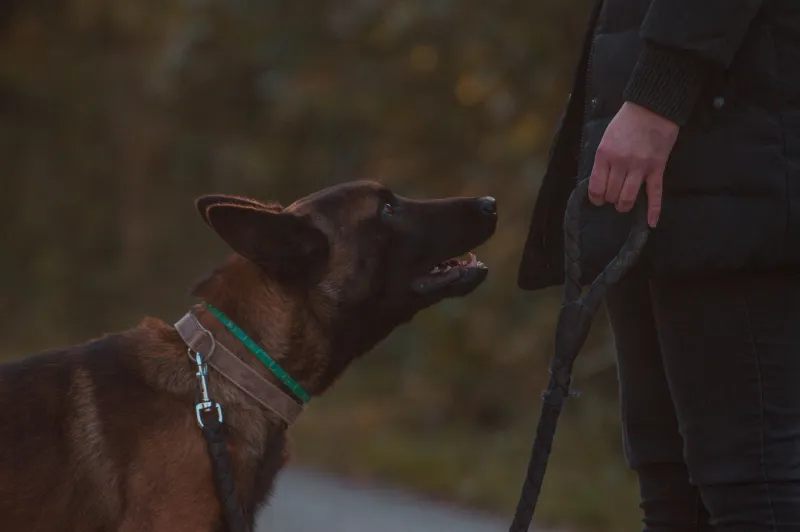
It's one of the most humbling moments in dog ownership. You've been practicing "sit" for three weeks. Your dog has done it a hundred times. Then your neighbor crouches down, says the word once, and your dog's rear hits the floor like gravity suddenly got serious. You're standing there, treat in hand, wondering what just happened.
You're not imagining it. And no, your dog doesn't secretly hate you. But something real is going on — something that goes a lot deeper than obedience commands and training repetitions.
Dogs Are Reading You More Than You Realize
Here's the thing most people don't hear enough: dogs are extraordinarily sensitive readers of human behavior. Not just your words or hand signals — they're picking up on your breathing rate, your posture, the tension in your shoulders, the micro-expressions crossing your face before you even open your mouth.
Researchers studying canine social cognition have found that dogs track human gaze, emotional cues, and even hormonal signals (yes, really — they can literally smell stress hormones). So when you walk into a training session already frustrated from a long workday, already bracing for your dog to blow it again, your dog has clocked all of that before you've said a single word.
A trainer walks in calm, clear, and with zero emotional baggage attached to your specific dog's history. That's a genuinely different experience for your pup — and dogs tend to respond to it accordingly.
The Relationship Tax
Here's a concept worth sitting with: every relationship carries history, and that history has a cost.
When you've had a hundred frustrated moments with your dog — the leash pulling, the counter surfing, the selective hearing — that history lives in the room with you every time you train. You might not be consciously thinking about it, but your body is. Your expectations have been shaped by those past experiences. And dogs, being the perceptive creatures they are, pick up on the subtle tension that creates.
Trainers and strangers don't carry that weight. They meet your dog fresh. There's no emotional scar tissue from the time your dog blew past you at the dog park and you had to chase them across three backyards. That blank slate is genuinely powerful.
This doesn't mean your relationship is a liability — far from it. But it does mean that the emotional patterns you've developed around training need some honest attention.
Consistency Isn't Just About Commands
Most training advice focuses on behavioral consistency: use the same word, the same hand signal, reward at the right moment. That's all real and important. But there's another layer of consistency that rarely gets talked about — emotional consistency.
Dogs learn patterns. If your energy is unpredictable — calm one session, tense and impatient the next — your dog is spending cognitive bandwidth trying to figure out what version of you showed up today. That's mental energy that isn't going toward learning the task at hand.
Effective dog trainers (the ones dogs seem to magically respond to) tend to have a remarkably stable emotional baseline during sessions. Not robotic — just grounded. They don't spike with excitement when things go well or visibly deflate when things go sideways. That steadiness communicates safety and clarity to a dog, and dogs work better when they feel safe.
Authenticity Matters More Than Technique
Here's something counterintuitive: you can do everything "right" — correct timing, appropriate rewards, proper leash pressure — and still get inconsistent results if your emotional state doesn't match your signals.
Dogs are wired to detect authenticity. If you're saying "good boy!" in an upbeat voice but your body is tense and your reward delivery feels mechanical, your dog is getting mixed messages. The verbal praise says one thing; everything else says another. Dogs, when forced to choose, tend to trust the nonverbal.
This is why some owners see dramatic improvement just by working on their own mindset before touching the leash. Taking a few deep breaths before a session. Genuinely letting go of the expectation that your dog will mess up. Approaching training with actual curiosity instead of braced-for-impact tension.
It sounds almost too simple. It works more often than people expect.
How to Become the Person Your Dog Responds To
The good news? None of this is fixed. The relationship you have with your dog is alive — it changes based on what you put into it. Here's where to start:
Audit your emotional state before sessions. If you're coming in hot from something else, give yourself five minutes to decompress first. A short walk, some deep breathing, whatever works. You want to show up neutral and present.
Separate your dog's history from this moment. Your dog isn't blowing you off because of all the times before. Dogs live in the present in a way humans genuinely struggle to. Try to meet them there.
Lower the stakes on purpose. High-pressure sessions create tense handlers, which create tense dogs. Practice things your dog already knows well. Build some wins into your routine. That positive feedback loop changes the emotional texture of training for both of you.
Watch yourself on video. This one's uncomfortable but incredibly useful. Film a training session and watch it back. You'll see things in your posture, your timing, and your expressions that you had no idea were happening in the moment.
Work with a trainer — but stay in the room. Don't just drop your dog off and pick them up later. Watch what a skilled trainer does and, more importantly, how they carry themselves during the session. You'll learn as much from that as your dog does.
The Real Magic
At K9 Magic, we talk a lot about the transformation that happens when training clicks — and it's real. But the deepest version of that transformation isn't about commands or tricks. It's about the relationship doing the heavy lifting.
When your dog trusts you completely — when they read your calm as safety, your signals as clear, and your presence as something worth orienting toward — training stops feeling like a battle of wills and starts feeling like a conversation.
That's the magic. Not the trick. Not the technique. The relationship.
And the beautiful thing is that you get to build it, one honest, grounded session at a time.