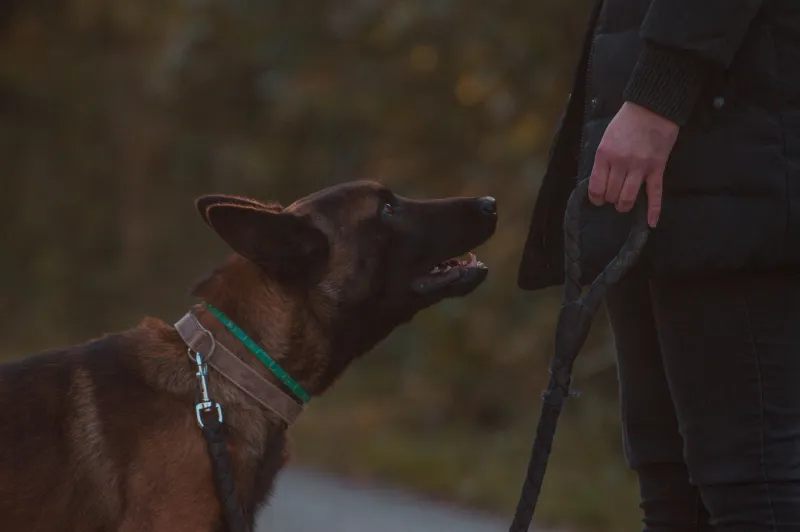
Your Dog's a Star in Class — So Why Does He Pretend He's Never Met You at Home?

Photo by Photo by Lawrence Krowdeed on Unsplash on Unsplash
You've seen it happen. Your dog walks into obedience class and performs like he's auditioning for a dog food commercial. Sits on cue, holds his stay, trots through the recall like a pro. The instructor smiles. The other owners glance over with mild envy. You feel like a genuinely great dog parent.
Then you get home.
You ask for a simple "sit" before dinner, and your dog stares at you like you just spoke Mandarin. He wanders off. He sniffs the couch. He does literally anything except what you asked. And you're left wondering whether any of those classes actually stuck — or if your dog just has a very specific performance schedule that doesn't include your kitchen.
This frustrating pattern has a name in the training world: context dependency. And once you understand what's driving it, you can actually fix it.
Why the Classroom Feels Like a Different Planet
Dog training classes are, by design, controlled environments. The space is familiar to the instructor, the distractions are managed, and the entire setup is engineered to set dogs up for success. There's a reason your pup performs well there — everything about that room signals "this is where we work."
Your home, on the other hand, is a sensory explosion. It smells like last night's dinner, the neighbor's cat, your kids' soccer cleats, and about forty other things your dog finds infinitely more interesting than your request to "down." The couch is right there. The backyard beckons. The rules feel looser because, well, they usually are.
Here's the hard truth: dogs don't generalize the way humans do. When your dog learns "sit" in a training hall with a specific instructor, specific lighting, and specific smells, he's learned "sit in that context." The behavior hasn't automatically transferred to every other setting — it has to be actively taught in those new environments.
The Instructor Effect Is Real
There's another piece of this puzzle that doesn't get talked about enough: the authority shift. Your trainer carries a certain energy — calm, consistent, clear. Dogs pick up on this almost immediately. The instructor isn't emotionally invested in whether your dog complies in the way you are. They don't feel embarrassed when the dog doesn't listen. They don't repeat the command three times with increasing desperation. They just... wait.
When you're at home, the dynamic changes completely. You're the person who feeds your dog, cuddles on the couch with him, lets him sleep at the foot of your bed, and occasionally slips him a piece of bacon when your spouse isn't looking. That's a beautiful relationship — but it's a different one than the instructor has. Your dog has learned that the rules with you are negotiable in ways they aren't with the trainer.
This isn't about being dominant or "alpha" in some outdated, aggressive sense. It's about being consistent. Dogs thrive when expectations are clear and predictable. If your commands sometimes mean something and sometimes don't, your dog isn't being stubborn — he's being rational. He's learned that waiting you out often works.
Closing the Gap: Bringing Class Home
The good news? This is completely fixable. It just requires some intentional work on your end.
Start with short, structured sessions at home. Don't just randomly ask for commands throughout the day and hope for the best. Set aside five to ten minutes where you're fully present — no distractions, treat pouch ready, and your full attention on the dog. Signal that training time is happening. This helps your dog shift into "work mode" the same way he does at class.
Change locations constantly. Once your dog knows a command in your living room, practice it in the backyard. Then the driveway. Then a quiet park. Then a slightly busier sidewalk. The goal is to practice the behavior in enough different environments that it starts to feel universal rather than location-specific. Trainers call this proofing, and it's one of the most skipped steps in home training.
Match your energy to the task. Dogs read body language with remarkable precision. If you're asking for a sit while scrolling your phone and half-watching Netflix, your dog knows you're not really in charge of the moment. Stand up straight, make eye contact, and mean what you say. You don't have to be stern — just present. Calm confidence is contagious in both directions.
Stop repeating commands. This one stings a little, but it matters. Every time you say "sit, sit, SIT" before your dog complies, you're teaching him that the first command is optional. Say it once, wait, and if nothing happens, use a gentle physical prompt or lure before repeating. Consistency here pays off faster than almost anything else.
Bring the classroom ritual home. Think about what signals training time at class — maybe it's a specific leash, a treat bag, or even just the act of stepping into a cleared space. Recreate that ritual at home. Dogs are creatures of habit, and rituals help them mentally shift gears.
You Are the Magic Ingredient
Here's the thing about K9 magic — it doesn't live in the training hall. It lives in the relationship you build with your dog every single day, in the small moments between formal sessions. The way you follow through when you give a command. The way you celebrate when your dog gets it right. The way you stay calm when he doesn't.
Your dog isn't ignoring you at home because he's forgotten his training. He's testing the environment, the way dogs always do. Your job is to make it crystal clear that the rules you practiced in class apply everywhere — because you're the one enforcing them, not the instructor.
That's actually great news. It means the power to transform your dog's behavior at home was always in your hands. The class gave you the tools. Now it's time to use them where it counts.
And when your dog finally drops into a perfect sit the first time you ask — in your kitchen, with the TV on and the neighbor's dog barking outside — that's the real magic moment. No classroom required.