One Command, A Hundred Problems Solved: The Quiet Power of 'Go to Place'

Photo by Photo by Giorgio Trovato on Unsplash on Unsplash
Picture this: Your doorbell rings. Your dog loses his mind. He's spinning, barking, launching himself at whoever just walked through the door. Your guest is doing that awkward half-laugh, half-panic thing while trying to keep their drink from spilling. You're shouting "Down!" and "Stop!" and "Oh my god, he's friendly, I promise!" — and none of it is working.
Now picture a different version. The doorbell rings. Your dog trots over to his mat in the corner of the entryway, lies down, and waits. Calm. Still. Almost smug about it.
That second scenario isn't a fantasy. It's what a well-trained "go to place" command actually looks like in a real home — and it might be the single most versatile behavior you can teach your dog.
What 'Go to Place' Actually Is (And Why It's Different From 'Stay')
At its core, "go to place" is exactly what it sounds like: you send your dog to a designated spot — usually a mat, bed, or crate — and they remain there until released. But here's where it gets interesting from a training science perspective.
Unlike a basic "stay," which asks your dog to freeze in place wherever they happen to be standing, "go to place" teaches your dog to move toward something and then settle. That's a two-part behavior involving both locomotion and impulse control. It gives your dog a concrete destination with a clear beginning and end, which is cognitively much easier for dogs to hold onto during high-arousal moments.
Think of it this way: "stay" is passive. "Go to place" is a job. And dogs — especially working breeds, high-energy dogs, or anxiety-prone pups — do remarkably better when they have a job to do.
The Behavior Cascade Nobody Talks About
Here's what surprises most owners: they teach "go to place" to solve one specific problem, and a handful of other problems quietly disappear on their own.
Take Sarah, a Golden Retriever owner in Columbus, Ohio. She started working on "place" specifically because her dog, Biscuit, wouldn't stop counter-surfing during dinner prep. Six weeks later, she noticed Biscuit had also stopped following her from room to room obsessively, had calmed down significantly when guests arrived, and was settling more easily at night.
"I didn't even connect it at first," Sarah said. "I thought he was just maturing. But it was the mat. He had somewhere to be."
This tracks with what behavioral science tells us about dogs and stress. A lot of problematic behaviors — the pacing, the barking, the destructive chewing — stem from a dog not knowing what to do with themselves in a given moment. "Go to place" fills that vacuum. It reduces ambient anxiety by giving the dog a predictable role during unpredictable situations.
How to Teach It: The Step-by-Step Breakdown
You don't need fancy equipment. A bath mat, a folded blanket, or a dog bed works perfectly. Here's how to build the behavior from scratch.
Step 1: Make the mat magical. Before you add any cue, spend a few sessions just rewarding your dog anytime they interact with the mat — sniffing it, stepping on it, looking at it. Toss treats onto the mat randomly when they're nearby. The goal is simple: the mat becomes the best real estate in the house.
Step 2: Shape the "four paws on" behavior. Lure your dog onto the mat with a treat. The moment all four paws are on it, mark with a "yes" or a clicker and reward. Repeat until they're hopping on confidently.
Step 3: Add duration. Once they're reliably getting on the mat, start asking for a down position and building the time they stay there before releasing them with a word like "free" or "all done." Start with five seconds. Work up to two minutes over multiple sessions.
Step 4: Add the cue. Now that the behavior is fluent, add the verbal cue — "place," "mat," "bed," whatever you want to call it — right before they move toward it. Consistency in the word matters more than which word you choose.
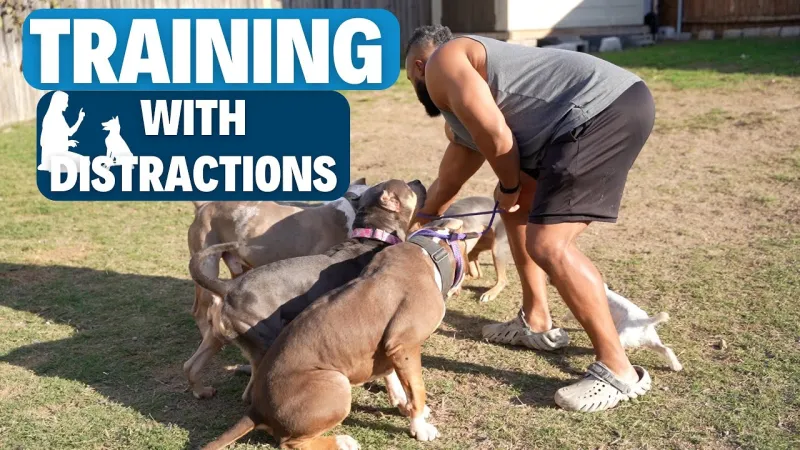
Step 5: Add distance and distractions. Send them to the mat from across the room. Practice while someone knocks on a door. Practice during dinner. This is where most owners rush, and it's worth slowing down. Distractions are a separate skill that needs to be trained deliberately.
Real-World Scenarios Where This Command Shines
The doorbell situation. Train your dog to go to their mat the moment they hear the doorbell. Practice this by ringing the bell yourself dozens of times during training sessions — no actual guests required. Eventually, the bell itself becomes the cue to go find the mat.
Dinnertime begging. Place the mat in a corner of the kitchen or dining area. When you sit down to eat, send your dog to place before the begging starts. You're not reacting to the behavior — you're preventing it from happening in the first place.
Separation anxiety warm-up. "Go to place" is genuinely useful as a stepping stone for dogs who struggle when left alone. Practicing calm, settled time on the mat — with you present but not engaging — helps dogs learn that being still and alone-ish is safe and even rewarding.
Vet waiting rooms and public spaces. A dog who knows "place" can be directed to settle on a portable mat in new environments, which is a game-changer for anxious dogs in overstimulating spaces.
Common Mistakes That Stall Progress
The biggest one? Using "place" as a punishment. If you send your dog to their mat when you're frustrated with them, you've just poisoned the cue. The mat needs to stay a positive, rewarding destination — always.
Another common misstep is moving too fast through the distraction phase. Your dog might hold a solid "place" for five minutes in a quiet house and completely fall apart the moment someone knocks on the door. That's not regression — that's a different skill that hasn't been trained yet. Be patient and proof the behavior in layers.
Finally, make sure your release cue is crystal clear. Dogs who don't have a consistent release word often start breaking the behavior on their own, which erodes the whole command over time.
The Bottom Line
There's no shortage of training techniques promising to fix specific problems — and some of them work great for exactly what they're designed for. But "go to place" operates on a different level. It doesn't just address a single behavior. It gives your dog a framework for navigating the moments that used to send them into a tailspin.
One mat. One cue. A whole lot of calm.
If you've been chasing fixes for a rotating cast of problems and feeling like you're barely keeping up, this might be the place to start — literally.