Behind the Breakthrough: What's Really Happening When Your Dog Finally Gets It
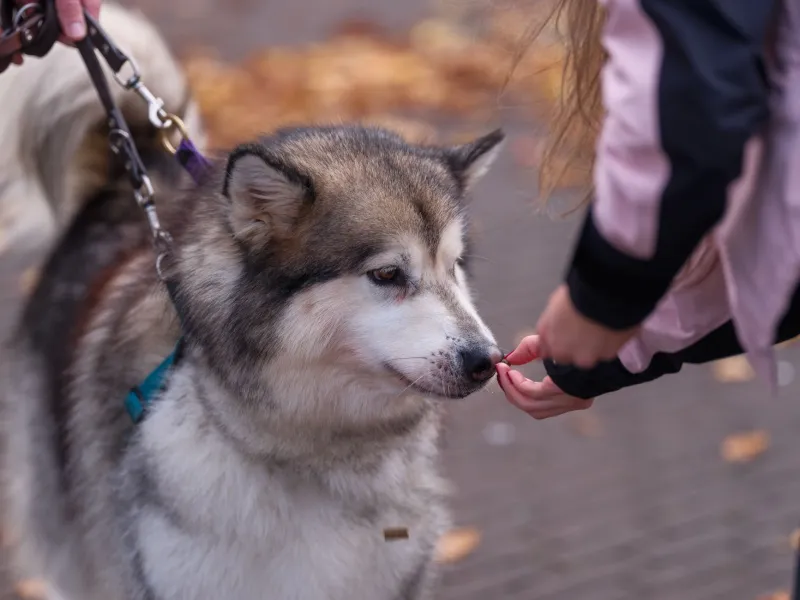
You've been at it for weeks. Same command, same hand signal, same treat pouch. And then one Tuesday afternoon — out of nowhere — your dog sits the second you ask. Clean. Confident. Like they've known how to do it all along.
It feels like a magic trick. Like something flipped in their brain overnight.
Here's the thing: something kind of did. Just not the supernatural kind.
Understanding what's actually going on during those breakthrough moments doesn't take the joy out of them — it multiplies it. Because once you see the mechanics, you realize you weren't just lucky. You built something. And you can build it again.
Your Dog's Brain Was Working Even When It Looked Like It Wasn't
One of the most frustrating things in dog training is the plateau phase. Your pup seems checked out. They're making the same mistakes. You're starting to wonder if you're doing something wrong — or if your dog is just, well, not the sharpest tool in the shed.
Spoiler: they're probably fine.
What looks like a stall is often a period of what researchers call latent learning — a process where the brain is quietly organizing and consolidating new information without showing obvious outward signs of progress. Your dog isn't ignoring the lessons. They're filing them.
In dogs, this consolidation happens largely during rest and sleep, when the hippocampus — the brain region responsible for forming memories — replays recent experiences and strengthens neural pathways. Every repetition you did during practice? It's being catalogued. The breakthrough you see on day 22 was actually built during days 8 through 21, even when nothing looked like it was sticking.
This is why trainers often say rest is part of training. It genuinely is.
The Role of Neural Pathways (And Why Repetition Isn't Boring — It's Biology)
When your dog learns a new behavior, what they're really doing is building a neural pathway — a chain of connected neurons that fire in sequence when a specific trigger appears. The first time you ask for a "sit," that pathway is faint. Fragile. Easy to lose.
But every time that pathway fires — every successful repetition, every reward delivered at the right moment — the connection gets a little stronger. Neuroscientists sometimes describe this as neurons that "fire together, wire together." The more consistently a behavior is reinforced, the more automatic it becomes.
The breakthrough moment? That's the point where the pathway has been reinforced enough that it activates quickly and reliably, even under mild distraction or in slightly different contexts. It's not a sudden leap — it's the cumulative result of dozens of small reinforcements finally crossing a threshold.
This is also why inconsistency is so damaging early in training. If the pathway only fires sometimes, it stays weak. Consistent, correctly-timed reinforcement is what turns a fragile new behavior into a durable one.
Environment Is Doing More Than You Think
Here's a variable most owners underestimate: the context your dog is in when the breakthrough happens.
Dogs are incredibly context-dependent learners. They don't generalize the way humans do. A dog who sits perfectly in your living room may genuinely not understand that "sit" means the same thing in your backyard, at the park, or in front of the pet store.
So when a breakthrough happens in a low-distraction, familiar environment — your kitchen, your backyard on a quiet morning — it's partly because your dog's brain isn't competing with a flood of sensory input. The neural pathway for that behavior can fire cleanly, without interference.
This is why training in layers matters so much. Start in calm, familiar spaces. Once the behavior is solid there, gradually introduce new environments and distractions. Each new context is essentially a mini-relearning process, but it goes faster because the underlying pathway already exists.
The goal is what trainers call generalization — the point where your dog understands that "sit" means sit everywhere, not just in the kitchen when you're holding a treat.
Your Timing and Emotional State Are Part of the Formula
This one's a little uncomfortable, but it matters: you are a variable in every training session.
Dogs are exquisitely sensitive to human body language, tone, and stress levels. Research has shown that dogs can detect cortisol changes in humans — meaning they may literally smell your anxiety. When you're frustrated, rushed, or tense during training, your dog picks up on it. That ambient stress can suppress their ability to learn and perform.
Conversely, when you're relaxed, focused, and genuinely engaged — when the session feels like a game rather than a test — dogs tend to perform better. Your calm creates a low-threat environment where the brain can learn without the interference of a stress response.
The breakthroughs that seem to come out of nowhere? Many of them happen during sessions where the owner showed up a little lighter. A little less attached to the outcome. That's not coincidence.
Timing of Reinforcement: The Window Is Smaller Than You Think
If there's one technical detail that separates training that works from training that doesn't, it's reinforcement timing.
Dogs live in the immediate moment. The window for connecting a reward to a behavior is roughly one to two seconds. Miss it, and you're not reinforcing the sit — you're reinforcing whatever your dog did in the moment you delivered the treat (standing up, sniffing the floor, looking sideways at a squirrel).
Many training breakthroughs happen when an owner — often without fully realizing it — accidentally nails their timing. The treat lands in that golden window, the neural pathway lights up with crystal clarity, and suddenly the dog gets it in a way they hadn't before.
This is why tools like clickers are so effective. The click marks the exact behavior with precision, bridging the gap between the moment and the reward. But even without a clicker, simply slowing down and being intentional about when you deliver reinforcement can dramatically accelerate progress.
So What Can You Actually Control?
The good news in all of this is that breakthroughs aren't random. They're the output of specific, repeatable conditions. Here's what you can stack in your favor:
- Keep sessions short and frequent. Five minutes, three times a day beats one exhausting 30-minute marathon.
- Train when both you and your dog are calm and rested. Tired brains — human or canine — don't consolidate learning well.
- Nail your timing. Reward the behavior, not what comes after it.
- Be consistent. Same word, same signal, same criteria for success. Every time.
- Gradually expand the context. Once a behavior is solid at home, take it on the road.
- Let rest do its job. Don't drill the same thing obsessively in one sitting. Practice, then give the brain time to process.
The Real Magic Is Repeatability
There's something genuinely exciting about knowing that the moment your dog finally nails a command isn't a fluke. It's a result. It means the work you put in actually worked — it just worked on a timeline that was happening inside your dog's brain, not on your training calendar.
At K9 Magic, we've always believed that great dogs aren't born — they're built, one well-timed repetition at a time. The "magic" is just science you can see with your own eyes.
And the best part? Now that you know how it works, you can do it again. And again. And again.