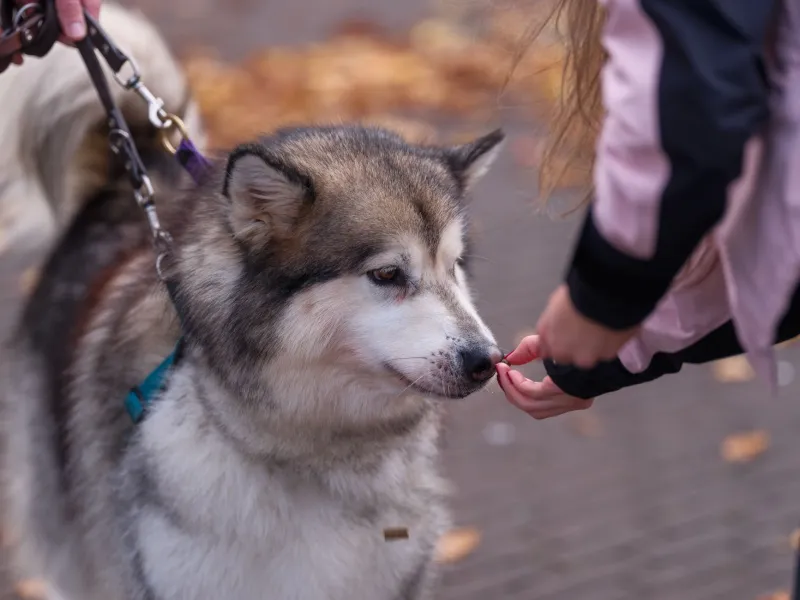
Why Your Dog Acts Like a Different Animal the Moment You Leave the Backyard
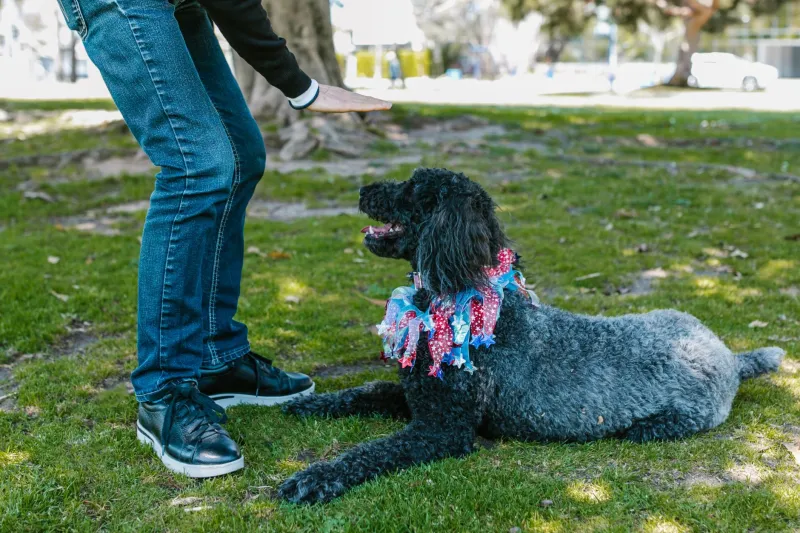
You've put in the work. Weeks of sit, stay, come, leave it — your dog has it down cold. At home, he's practically a graduate student. Then you clip on the leash, walk to the park, and it's like someone hit the factory reset button. You say "sit" and he stares at a squirrel like you don't exist.
Welcome to one of the most frustrating (and most common) gaps in dog training. It has a name — stimulus control failure in novel environments — and understanding what's actually happening in your dog's brain is the first step toward fixing it for good.
Your Dog Didn't Forget. He Just Got Overwhelmed.
Here's the thing most people miss: when your dog ignores you at the dog park, he's not being defiant. He's not testing you. His brain is genuinely maxed out.
Dogs learn commands in context. When your pup mastered "stay" at your kitchen table, his brain filed that behavior under a very specific set of conditions — the smell of your house, the quiet hum of the refrigerator, your familiar body language, zero competition for his attention. Those conditions become part of the cue itself.
Neuroscientifically speaking, the prefrontal cortex — the part of the brain responsible for impulse control and learned behavior — gets essentially outcompeted by the limbic system when arousal spikes. In plain English: the moment your dog's excitement or stress level jumps high enough, the "thinking" brain loses the tug-of-war to the "reacting" brain. Squirrel wins. You lose.
This isn't a character flaw. It's biology.
The Distraction Ladder: Why You Need to Earn Every Rung
Most owners make the same mistake. They train in easy conditions, feel good about their dog's progress, and then immediately try to use those commands in the hardest possible environments — busy trails, Fourth of July barbecues, off-leash dog parks. That's like teaching someone to drive in an empty parking lot and then immediately putting them on the interstate during rush hour.
What you actually need is a distraction ladder — a deliberate, graduated system for raising the difficulty of your training environment one manageable step at a time.
Think of it this way:
- Level 1: Inside your home, no distractions
- Level 2: In your backyard, low traffic
- Level 3: In front of your house, occasional passersby
- Level 4: A quiet neighborhood street
- Level 5: A local park on a slow weekday morning
- Level 6: A busier park with dogs and people at a distance
- Level 7: Close proximity to dogs, people, bikes, kids — the full chaos
The rule is simple: your dog needs to be reliable at one level before you move to the next. If he's falling apart at Level 4, that's not a Level 4 problem — it's a sign you rushed past Level 3.
The Three Variables You Can Actually Control
When you're working up that ladder, you're really managing three things: distance, duration, and distraction intensity. Trainers sometimes call these the "Three D's," and understanding how to dial each one up or down independently gives you enormous control over your dog's success rate.
Distance is your best friend. If your dog can't hold a stay when another dog is five feet away, move to fifty feet. Find the distance where he can succeed, reward that, and slowly close the gap over multiple sessions.
Duration means how long you're asking your dog to perform. In a new environment, cut your expectations in half — or more. If he holds a sit for thirty seconds at home, ask for five seconds at the park. Build from there.
Distraction intensity is about what's actually happening around your dog. You can control this more than you think — choosing the time of day, the specific location, even where you position yourself relative to the chaos.
Never crank up all three variables at once. Pick one to challenge, keep the other two easy.
Practical Exercises That Actually Build Real-World Reliability
The Engagement Check-In
Before you ask your dog to do anything in a new environment, spend two to three minutes just doing check-ins. Walk around, let him sniff, then randomly say his name. The moment he looks at you — jackpot. Big reward. You're teaching him that tuning into you in distracting places is highly worth his while. Don't ask for any commands yet. Just build the habit of eye contact first.
The Drive-By Distraction Drill
Find a spot where dogs or people pass at a predictable distance — a path near a dog park works great. Position yourself far enough away that your dog notices the distraction but can still respond to you. Ask for a simple behavior (sit, watch me, touch), reward the moment he engages. Gradually work closer over multiple sessions. You're essentially teaching him that paying attention to you around distractions is the game, not the exception.
Pattern Games in New Places
Pattern games — simple, predictable sequences your dog knows cold — are gold in distracting environments because they require minimal thinking and give your dog something familiar to anchor to. Try a simple "sit, down, sit, reward" loop the moment you arrive somewhere new. It lowers his arousal, reorients his focus to you, and reminds him that the rules of the game are the same here as they are at home.
Premack's Principle: Use the Distraction as the Reward
This one's a game-changer. Premack's Principle basically says that a high-probability behavior (sniffing that fire hydrant) can be used to reinforce a low-probability behavior (coming when called). Instead of competing with the environment, use it. "Come" → dog comes → "go sniff!" The distraction becomes the payoff. Over time, your dog learns that listening to you is literally the ticket to the things he wants most.
Consistency Is the Invisible Variable
Here's the piece that ties everything together: your dog needs to experience success in distracting environments repeatedly before reliability becomes automatic. One good session at the park doesn't rewire the brain. Ten sessions across different parks, different times of day, different distraction types — that's what builds the neural pathways that make a command stick regardless of what's going on around him.
This is also why it matters that everyone in your household uses the same commands, the same expectations, and the same reward structure. The more consistent the signal, the stronger the behavior becomes.
The Bottom Line
A dog who listens at home but checks out in the real world isn't a bad dog — he's an undertrained dog, at least when it comes to real-world environments. That's not an insult; it's just an honest assessment of where the work needs to happen.
The magic isn't in finding a louder voice or a stronger correction. It's in building up through environments systematically, rewarding engagement relentlessly, and giving your dog enough repetitions in enough contexts that "listen to my person" becomes the default setting — no matter what else is happening around him.
That's the kind of reliability that actually changes your life. And your dog's.