Hooked on the Jackpot: How Premium Treats Can Quietly Undermine Your Dog's Drive to Listen
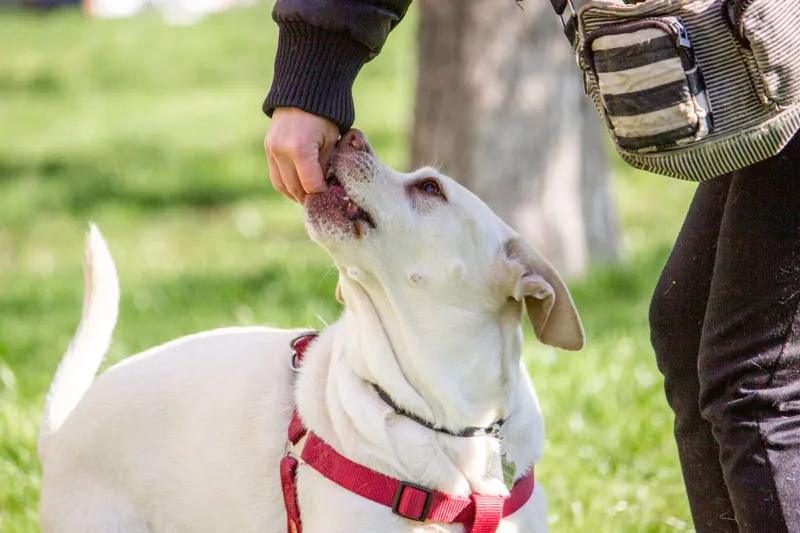
Picture this: You've got a bag of freeze-dried salmon in your pocket, and your dog is absolutely nailing every command. Sit. Down. Stay. Heel. Flawless. You're feeling like a training wizard.
Then one afternoon you head out without the good stuff — maybe just a few plain kibble pieces or nothing at all — and suddenly your dog looks at you like you're speaking a foreign language. The magic? Gone.
This isn't a quirky coincidence. It's what trainers sometimes call the treat trap, and it's more common than most dog owners realize. The very thing you're using to build good behavior can, over time, quietly hollow out your dog's genuine motivation to work with you.
Let's break down what's actually happening — and how to get out of it.
Your Dog's Brain on High-Value Rewards
High-value treats — think real meat, cheese, hot dogs, or anything that makes your dog's eyes go wide — are powerful training tools precisely because they trigger a strong dopamine response. That neurochemical rush reinforces behavior fast, which is exactly why premium rewards are so useful when you're introducing a new command or working through a tough distraction.
But here's the catch: when a dog learns that only the high-stakes snack is worth performing for, you've essentially trained them to evaluate every situation like a tiny Wall Street trader. Is the reward worth the effort? If the answer is no, they opt out.
Researchers who study animal learning call this reward inflation. The more consistently you raise the stakes, the higher the bar gets. What started as a motivating jackpot becomes the expected baseline — and anything below it stops registering as worthwhile.
In practical terms, you end up with a dog who isn't really listening to you. They're listening to your treat pouch.
When High-Value Treats Actually Make Sense
Before you throw out your bag of chicken bits, let's be clear: premium treats aren't the enemy. Knowing when to use them is the whole game.
High-value rewards genuinely earn their place in a few specific situations:
- Learning brand-new behaviors. When a dog has no idea what you're asking, a powerful reward accelerates the association.
- High-distraction environments. If you're training near a busy dog park or a neighborhood full of squirrels, you need something that can compete with the environment.
- Breaking through a frustrating plateau. Sometimes a strategic jackpot moment reignites a dog's engagement when progress has stalled.
- Working with anxious or fearful dogs. In these cases, premium treats help build positive associations that lower-value rewards simply can't achieve as quickly.
The problem isn't using high-value treats in these moments. The problem is never graduating beyond them.
The Variable Reward Schedule — Your Secret Weapon
One of the most well-established concepts in behavioral science is the variable reinforcement schedule, and it's the foundation of breaking the treat trap.
Here's the idea: instead of rewarding every correct response with the same high-value treat, you vary when the jackpot appears and what the reward actually is. Sometimes it's a piece of chicken. Sometimes it's a kibble piece. Sometimes it's enthusiastic praise. Sometimes it's a quick game of tug.
Why does this work? Because unpredictability is actually more motivating than consistency, once a behavior is established. Think about why people keep pulling the lever on a slot machine — the random reinforcement keeps them engaged far longer than a guaranteed payout would.
For your dog, this means they stay engaged because they never quite know when the jackpot is coming. That anticipation builds real drive, and it gradually shifts your dog's motivation away from "I only work for the premium stuff" toward "working with my person is genuinely rewarding."
Fading the Treat Without Losing the Behavior
Transitioning away from constant high-value treats doesn't mean going cold turkey. That's a recipe for frustrated dogs and frustrated owners. Instead, think of it as a gradual fade — a long, patient process of shifting the reward landscape.
Start by varying your treat quality. Mix your training bag. Toss in some regular kibble alongside the good stuff. Your dog won't know which one is coming, and that uncertainty keeps them in the game.
Layer in life rewards. A life reward is anything your dog already loves that isn't food — a chance to sniff a really interesting patch of grass, a quick game of fetch, permission to greet another dog. These are powerful reinforcers that have nothing to do with treats, and using them teaches your dog that you are the gateway to all good things, not just the snack pouch.
Make your praise mean something. This one takes deliberate effort. If you've been delivering flat, low-energy "good boys" while focusing on getting the treat out of the bag, your verbal praise has probably lost its currency. Practice getting genuinely excited — change your tone, your body language, your energy. Dogs read us incredibly well, and authentic enthusiasm can become a real reward all on its own.
Raise criteria before fading rewards. Don't pull back on treats when your dog is still shaky on a behavior. Wait until they're performing reliably and confidently, then begin thinning out the food reinforcement while keeping up the enthusiasm and life rewards.
Building a Dog Who Wants to Work With You
Here's the bigger picture behind all of this: the goal of training at K9 Magic has never been to create dogs who perform for snacks. It's to build dogs who have a genuine, trusting relationship with their owners — dogs who find working with their people inherently satisfying.
That kind of dog doesn't need a piece of steak to sit when you ask. They've learned that engaging with you is worthwhile all by itself. The treat was just the training wheel.
This is what trainers mean when they talk about intrinsic motivation — a dog's internal drive to engage, please, and participate. It's not magic, and it doesn't happen overnight. But it does happen when owners understand the science behind reward systems and make deliberate choices about how and when to use them.
So the next time your dog performs a flawless recall across a distracting backyard and you reach into your pocket and hand them a single piece of kibble with a big smile and a "YES!" — and they wag their tail and lean into you like that was the best thing ever — you'll know you've crossed over.
You're not just training a dog anymore. You're building a partnership.
And that's where the real magic lives.