Spin, Bow, Conquer: The Hidden Obedience Power Hiding Inside Your Dog's Party Tricks
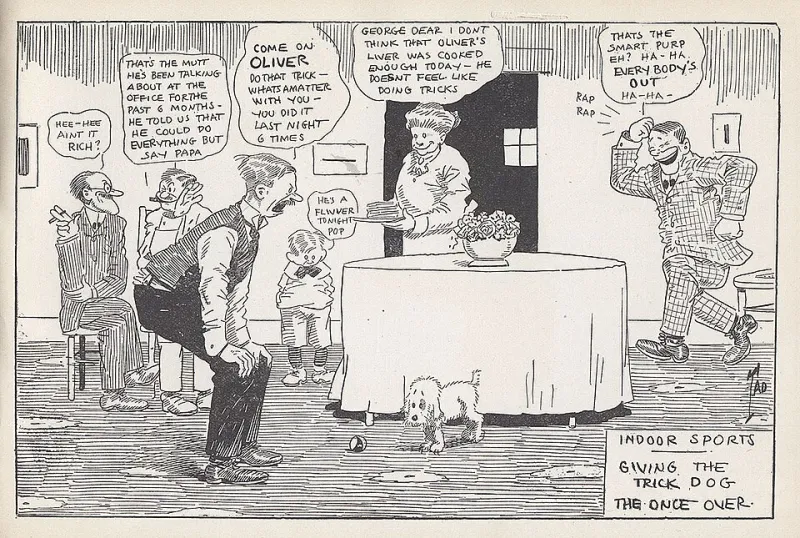
Photo: Tad Dorgan, Public domain, via Wikimedia Commons
Let's be honest — there's something deeply satisfying about watching your dog collapse dramatically on cue, legs in the air, tongue flopped out. Your guests lose their minds. Your dog looks like a canine comedian. And you? You feel like a magician.
But here's what most people don't realize: that little "play dead" routine isn't just a crowd-pleaser. It might be one of the most sophisticated behavioral training exercises your dog will ever do.
At K9 Magic, we've always said that good dogs become great dogs through the right kind of work — and sometimes that work looks a whole lot like play.
Your Dog's Brain Doesn't Know the Difference Between "Trick" and "Command"
From a neuroscience standpoint, your dog's brain doesn't file "spin" under "entertainment" and "sit-stay" under "serious business." It's all the same process: receiving a cue, suppressing competing impulses, selecting a specific behavior, and executing it for a reward.
Every repetition of that process — whether it's a dramatic bow or a reliable recall — strengthens the neural pathways associated with focus and voluntary behavioral control. Researchers in animal cognition have noted that the more varied the tasks a dog practices, the more flexible and responsive their decision-making becomes. In plain English? Teaching your dog weird stuff makes them smarter at everything.
So when you spend ten minutes teaching your dog to weave between your legs, you're not wasting training time. You're building the mental infrastructure that makes a solid "leave it" or a calm "down-stay" easier to achieve later.
The Impulse Control Connection
Here's where it gets really interesting. Many of the flashiest tricks require a level of impulse control that basic obedience commands don't always demand.
Take "stay" — a command most owners work on early. Your dog holds still. Good. But now consider teaching "wait for it," where your dog has to hold a piece of food on their nose before flipping it into the air and catching it. That exercise demands that same stillness, but layers in the challenge of an incredibly tempting distraction (the treat) positioned right at their face. The dog has to override a powerful instinct to snatch it.
Or think about "spin." Sounds simple, but getting a dog to complete a full rotation in response to a tiny finger circle requires them to track your body language, ignore environmental distractions, and commit to a movement sequence without stopping halfway to sniff the floor. That's sustained attention — the same quality you desperately need when you're trying to get your dog to focus on you at a busy dog park.
Trick training is essentially impulse control training in disguise, and it tends to be more engaging for dogs precisely because it's novel and dynamic.
Why Tricks Build Handler Attention Like Nothing Else
One of the biggest complaints we hear from dog owners is some version of: "He knows the command — he just doesn't care enough to do it when something else is going on." That's a handler attention problem, and it's incredibly common.
Here's the thing: tricks are inherently more interactive than standard obedience commands. Teaching a new trick requires close, two-way communication — you're watching your dog, your dog is watching you, and you're both trying to figure each other out. That collaborative dynamic builds what trainers sometimes call "engagement," the quality of your dog genuinely orienting toward you as the most interesting thing in the environment.
Dogs who go through a rich trick-training curriculum tend to develop a habit of checking in with their owners. They've learned that paying attention to you leads to cool, fun, rewarding things. That habit — that reflex of looking to you for information — is worth its weight in gold when you need your dog to listen in a distraction-heavy situation.
The Confidence Factor Nobody Talks About
There's another benefit to trick training that flies under the radar: it builds your dog's confidence in their own ability to learn.
This sounds a little abstract, but stay with us. Dogs who regularly experience the cycle of "I tried something, it worked, I got rewarded" develop a kind of optimistic, try-it-and-see approach to new challenges. Trainers sometimes call this "operant conditioning confidence" — the dog has learned that engaging with training problems leads to good outcomes, so they engage more readily.
Compare that to a dog who's only ever been trained through correction-heavy methods or strict repetition of a narrow set of commands. Those dogs can become hesitant, waiting to be told exactly what to do rather than actively problem-solving. Trick training, with its built-in creativity and positive reinforcement, produces dogs that lean in rather than shut down.
And a dog that leans in is a dog that learns faster — in every context.
How to Build Your Own Trick-to-Skill Pipeline
You don't need to overhaul your entire training approach. Here's a simple way to integrate trick training into what you're already doing:
Pair tricks with your obedience goals. Working on impulse control? Teach "leave it" alongside "balance the treat on your nose." Building focus? Add "spin" and "touch" to your attention work. The tricks reinforce the same neural circuits you're trying to develop.
Use tricks as warm-ups. Starting a training session with two or three quick, fun tricks your dog already knows gets their brain switched on and their attention locked onto you before you move into more demanding obedience work. It's like warming up your muscles before a run — you're priming the system.
Let tricks be the reward. Some dogs, especially high-drive working breeds, find the act of performing a trick more rewarding than a treat. Ask for a sit-stay, release them, and then immediately launch into a game of "which hand" or a quick spin-and-bow sequence. The trick becomes the payoff for the obedience behavior.
Teach at least one new trick per month. Novelty matters. The process of learning something new is cognitively demanding in a way that practicing known behaviors isn't. That ongoing learning challenge keeps your dog mentally sharp and keeps your training sessions from going stale.
The Magic Was Never Just for Show
At the end of the day, the line between a trick and a skill is a lot blurrier than most people assume. Both require attention, impulse control, body awareness, and trust in the handler. Both build the neural pathways that make dogs more responsive, more focused, and more reliable.
So the next time someone watches your dog spin and bow and play dead and says, "Oh, that's so cute — but does he actually listen?" you can smile and say yes. Because all that spinning and bowing is exactly why he does.