Late to the Game, Winning Anyway: Why Training Your Adult Dog Now Is Better Than You Think
Photo: Guy Kotlarov, CC BY-SA 3.0, via Wikimedia Commons
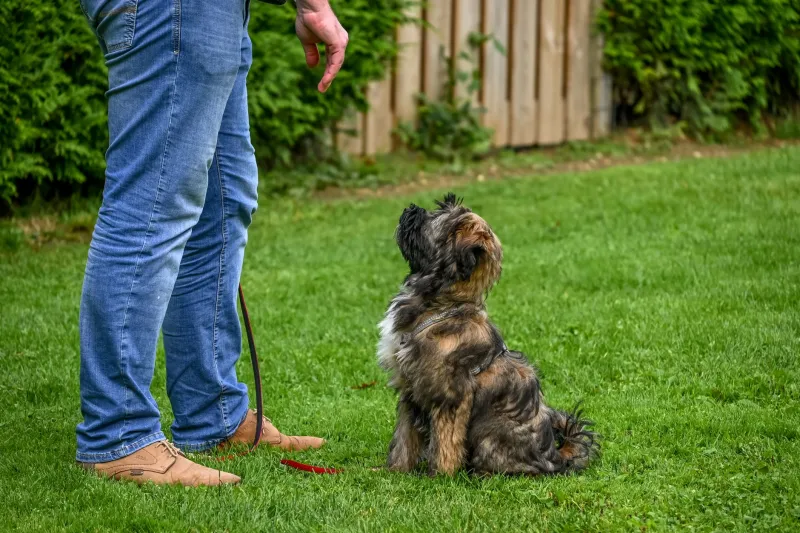
Somewhere along the way, dog culture developed a near-universal anxiety: if you didn't start training your puppy at eight weeks, you're already behind. The internet is full of posts from owners of six-month-old dogs asking if it's "too late." People adopt three-year-old rescue dogs and apologize for it, as though the dog arrived already broken.
At K9 Magic, we've worked with dogs of all ages — and we want to say this clearly: the guilt most owners carry about starting training "too late" is almost entirely unwarranted. In many cases, the adult dog in front of you is more ready to learn than a puppy ever was.
Let's talk about why.
The Puppy Myth We Need to Retire
Puppies are undeniably fun to train. They're impressionable, they're enthusiastic, and watching them figure things out for the first time is genuinely delightful. Early socialization and foundation work matters — nobody's arguing otherwise.
But here's what the puppy-first narrative glosses over: puppies are also neurologically immature, attention-deficit by design, and operating on hormonal and developmental timelines that make consistent training genuinely difficult. Puppy brains are still being built. Their ability to regulate arousal, hold focus, and generalize learned behaviors is limited by biology, not just inexperience.
A dog between two and five years old, by contrast, has a fully developed brain. Their impulse control systems are mature. Their stress responses have settled. And crucially, their personality is clear — which means you know exactly who you're working with, rather than guessing who this little furball is going to become.
That clarity is an enormous advantage.
What Adult Dogs Bring to the Training Table
Owners who begin serious training with adult dogs consistently report a few things that surprise them.
First: adult dogs often learn individual behaviors faster than puppies. Without the puppy's constant distraction by everything in the environment, an adult dog can lock in on a training session and stay there. A ten-minute session with a focused adult dog can accomplish what three sessions with a distracted puppy might.
Second: adult dogs tend to be calmer handlers. Puppies require a certain frantic energy — you have to be quick, you have to be exciting, you have to catch behaviors in half-second windows. Adult dogs are more patient. They'll wait for your cue. They'll try again if they get it wrong. That gives owners more room to breathe, communicate clearly, and actually enjoy the process.
Third: adult dogs have life experience. They've been reading human body language for years. They understand cause and effect in ways a puppy doesn't yet. When you start communicating clearly with an adult dog, they often pick up the system remarkably fast because they've been watching you — and all humans — for a long time.
Real Owners, Real Results
Karen, a teacher in suburban Ohio, adopted a four-year-old beagle named Copper from a local rescue. Copper had never had formal training. He pulled on the leash, ignored his name, and helped himself to anything left on the counter.
"I honestly thought we were going to be in training classes forever," she said. "But within about six weeks of consistent work, he was a different dog. The trainer told me he was one of the faster learners in the class, and I kept thinking — but he's four. I always assumed the older ones were harder."
Then there's Marcus, a retired firefighter in the Pacific Northwest who adopted a seven-year-old German Shepherd named Hank after his previous dog passed away. Hank came with some baggage — resource guarding, selective recall, anxiety in new environments.
"I went in expecting it to take a long time," Marcus said. "And some of it did. But Hank was so clearly trying to figure out what I wanted. Once he understood the system, once he trusted that I was consistent, things clicked fast. By month three, he was passing his Canine Good Citizen test. I cried. Embarrassingly."
These aren't outliers. They're patterns.
The Consistency Variable Matters More Than the Calendar
Here's the honest truth about timing: the single biggest predictor of training success isn't the age at which you started. It's the consistency you bring to it once you do.
A puppy trained inconsistently for three years will have a shakier foundation than an adult dog trained consistently for three months. The brain learns through repetition and pattern. It doesn't care whether those patterns started early or late — it cares whether they're reliable.
This is actually good news, because consistency is something you control entirely. You can't go back and start earlier. You absolutely can start being more consistent right now.
Managing Established Habits: The Real Challenge
Let's not pretend there are no genuine challenges with older dogs. There are — and being honest about them is more useful than false reassurance.
The main one is this: adult dogs who have practiced an unwanted behavior for years have built strong neural grooves around that behavior. Counter-surfing, leash pulling, jumping on guests — if your dog has been doing these things for three years, those behaviors are deeply reinforced. They won't disappear overnight.
But "takes longer to undo" is not the same as "impossible to undo." The brain remains plastic throughout a dog's life. Habits that have been built can be replaced with better ones. It requires patience, consistency, and sometimes a realistic recalibration of your timeline — but the work absolutely pays off.
The key is to approach established habits with a replacement strategy rather than a suppression strategy. You're not trying to stop the behavior — you're trying to make a different behavior more rewarding. That reframe tends to speed things up considerably.
Where to Start When You're Starting Late
If you're picking up training with an adult dog for the first time, here's a practical starting point:
Choose one or two behaviors and own them. Don't try to fix everything at once. Pick the behaviors that matter most for your daily life — maybe loose-leash walking and a reliable recall — and build real fluency there before expanding.
Make your training sessions short and frequent. Ten to fifteen minutes, twice a day, beats a single hour-long session every weekend. Frequency builds the neural patterns faster than duration.
Let your dog show you what motivates them. Adult dogs have often developed clear preferences. Some are food-motivated. Some want play. Some respond best to calm praise and physical affection. Figure out what your dog's currency is and spend it generously.
Celebrate the small stuff. When your dog looks at you instead of lunging at the squirrel, that's a win. When they come back to you after being distracted, that's a win. The small moments of connection add up fast.
The Best Time to Start Is Now
You didn't start at eight weeks. Maybe you didn't start at six months or a year. Maybe your dog is four, or seven, or ten. None of that changes what's possible from this moment forward.
The magic in dog training has never been about perfect timing. It's about showing up consistently, communicating clearly, and giving your dog a chance to show you what they're capable of. Adult dogs do that every day — and they're usually pretty spectacular at it.
You didn't miss the window. You just found a different one.