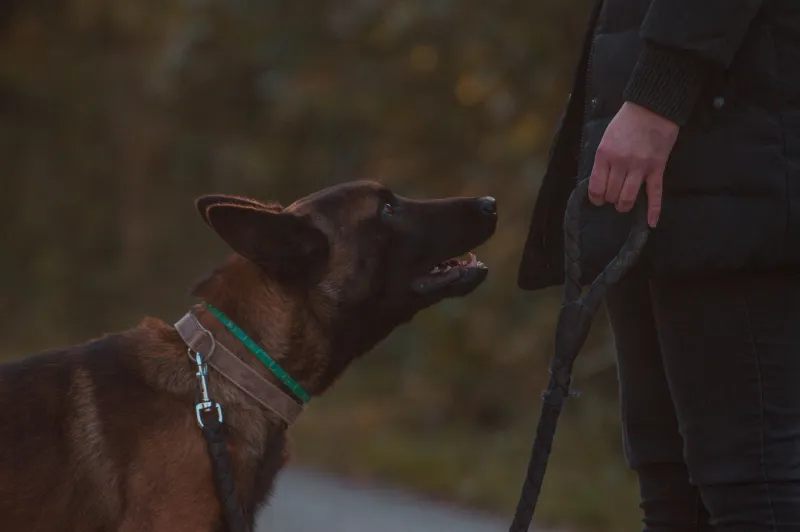
Why Your Dog Is a Genius for Everyone Else (And How to Steal That Magic Back)
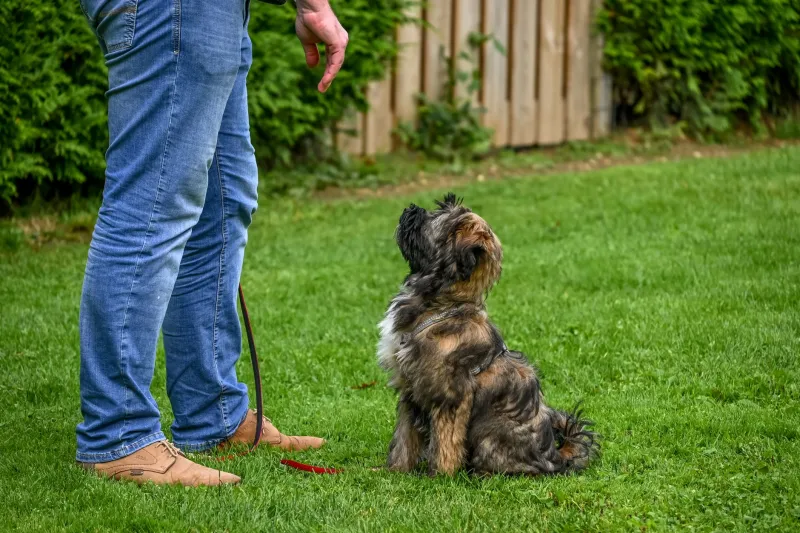
Picture this: You've been working on a solid "leave it" for three weeks. Your dog has heard the command approximately four thousand times. He knows what it means. He just... doesn't care. Then your trainer walks in, says it once, and your dog drops the sock like it's on fire.
Congratulations. You've officially experienced one of the most humbling moments in pet ownership.
Here at K9 Magic, we hear this story constantly — and we want you to know something important: this isn't a you problem. Well, it kind of is. But not in the way you think. Understanding why this happens is the first step toward flipping the script entirely.
The Novelty Effect Is Real, and It's Working Against You
Dogs are hardwired to pay attention to new things. It's a survival instinct baked in over thousands of years. A new person, a new voice, a new set of hand signals — all of that registers as genuinely interesting to your dog's brain.
When a stranger gives your dog a command, your dog has no prior context for it. There's no history of that person being ignored, no pattern of "this voice sometimes means nothing," no emotional baggage. The stranger gets a clean slate. You, on the other hand, are deeply familiar — which sounds like a good thing until you realize that familiarity can actually reduce your dog's attentiveness.
Think of it like this: you probably don't really hear the background music in your favorite coffee shop anymore. Your brain filters it out because it's predictable. Your dog does something similar with you. Your voice, your smell, your energy — it's all ambient noise unless you give him a reason to tune back in.
Expectation Bias: The Hidden Training Killer
Here's a concept that doesn't get talked about enough in dog training circles: expectation bias. When you've been working on a behavior for weeks, you carry the weight of every failed attempt into each new session. You expect your dog to blow it. And dogs, being the emotionally perceptive creatures they are, pick up on that expectation.
A trainer or a stranger walks in with zero expectations. They ask for a sit with the same energy they'd ask anyone. There's no tension, no subtle frustration, no microexpressions that say "please, just this once." Dogs read body language with a fluency most humans will never match, and they respond accordingly.
Your anxiety about your dog's performance becomes part of the training environment. And that environment is not exactly a confidence booster — for either of you.
The Emotional Attachment Paradox
You love your dog. That love, weirdly enough, can be part of the problem.
When we're emotionally invested in an outcome, we telegraph that investment. Our voices go up a little. Our shoulders tighten. We repeat commands too quickly because we're nervous. We give in earlier than we should because watching our dog struggle feels awful. None of this is conscious — it just happens.
A trainer doesn't have that emotional investment. They can wait out a stubborn moment without feeling personally rejected. They can hold a standard without it feeling like a big deal. That calm, neutral energy creates a training environment where the dog can actually think clearly instead of managing your emotions.
The good news? You can learn to bring that same energy. It takes practice, but it's absolutely learnable.
You've Accidentally Trained Your Dog to Tune You Out
Let's be honest about something. Over months or years of living together, most owners inadvertently teach their dogs that commands are optional. You said "off" and then laughed when he jumped on you anyway. You called "come" and gave up when he didn't respond. You repeated "sit" five times before he finally did it — which means he learned that "sit" means "sit on the fifth ask."
A stranger doesn't have that history. Every command they give is the first version of that command your dog has ever heard from them. There's no learned pattern of non-compliance to overcome.
This is actually empowering information, because it means you can reset those patterns. It takes intentionality, but the slate isn't as dirty as you might think.
Practical Strategies to Reclaim Your Role as Head Coach
Start acting like a stranger. Sounds strange, but try this: go somewhere new with your dog and run through your training routine. A different park, a friend's backyard, an empty parking lot. The change of environment removes the "you're just background noise" effect and forces your dog to actually process your commands fresh.
Become stingier with your commands. Say it once. Mean it. If your dog doesn't respond, don't repeat yourself — instead, use a gentle physical prompt or wait it out. Repeating a command teaches your dog that the first ask is just a suggestion. One ask, real consequence (or reward). Every time.
Work on your own body language. Stand tall, breathe steadily, and practice giving commands with a neutral tone rather than a pleading one. Video yourself during training sessions — you might be shocked at what you see. Slumped posture, upward-inflected commands, and nervous fidgeting all communicate uncertainty to your dog.
Create "stranger energy" at home. Before a training session, take five minutes to decompress. Put your phone away. Let go of whatever happened at work. Step into the session as a calm, focused handler rather than an exhausted owner who really needs this to go well today.
Use structured engagement before asking for anything. Spend two minutes doing something your dog already does perfectly — eye contact, a known trick, a quick play session. This re-establishes you as someone worth paying attention to before you introduce anything new or challenging.
Raise your rate of reinforcement temporarily. If your dog has learned to blow you off, you need to make responding to you wildly worth his while for a while. Jackpot rewards — think a small handful of high-value treats rather than one piece — for solid responses can rapidly rebuild the association between your voice and good things.
It's Not a Betrayal — It's Biology
Your dog isn't choosing your neighbor over you. He isn't making a statement about your worth as an owner. He's responding to social and environmental cues the way his brain was built to respond to them.
The magic moment comes when you understand those cues well enough to work with them instead of against them. When you walk into a training session with calm confidence, clear communication, and a history of following through — that's when you stop being background noise and start being the most interesting person in the room.
And that's really what K9 Magic is all about. Not tricks or commands for their own sake, but building the kind of relationship where your dog genuinely wants to work with you. Where you are the stranger whose attention he's trying to earn.
That kind of connection? That's the real magic.